Understanding premium braces options
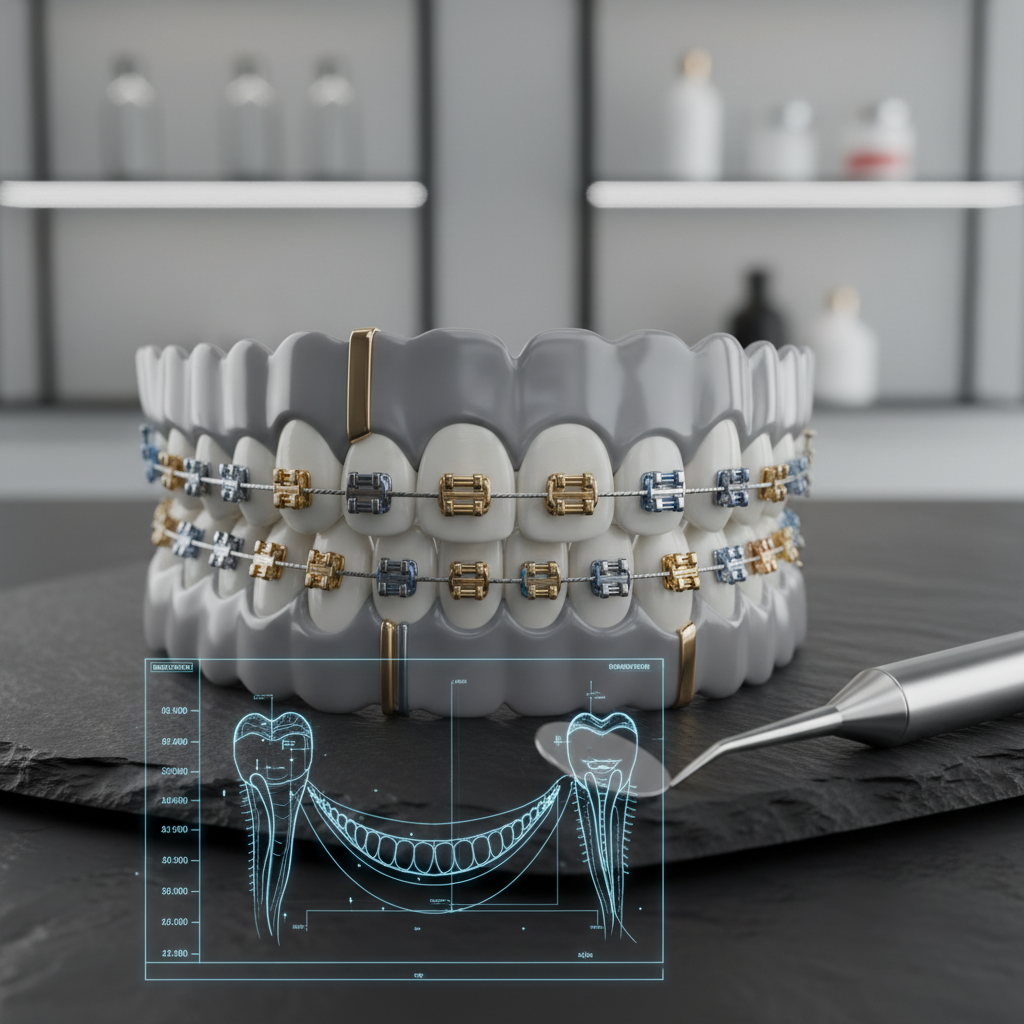
When you look beyond standard metal braces, you enter the world of premium braces options. These are designed for you if you want advanced technology, extra comfort, faster treatment, or a more discreet look, often all at the same time. Premium systems can be especially valuable when you have complex bite issues, previous orthodontic work that did not fully succeed, or high cosmetic expectations for your smile.
Premium choices include ceramic and lingual braces, advanced self‑ligating systems, and clear aligners like Invisalign, along with newer technologies that customize every bracket and aligner to your teeth. Many of these options pair well with modern planning tools such as AI orthodontic planning and digital smile planning tn, which help you see and understand the expected outcome before treatment begins.
By understanding what sets premium braces apart, you can choose a solution that fits your appearance goals, lifestyle, and clinical needs, instead of settling for a one‑size‑fits‑all approach.
When premium braces make sense
Premium braces options are not just about looks. They are often the right choice when your orthodontic needs or expectations go beyond average.
You might benefit from a higher‑end solution if you:
- Have a demanding professional or public‑facing role and want nearly invisible treatment
- Need correction of advanced crowding, bite asymmetry, or relapse after past orthodontics
- Are looking for the most precise finish possible for cosmetic or functional reasons
- Want to reduce the number of office visits or overall treatment time where clinically appropriate
- Value comfort, customized appliances, and the latest orthodontic technology refinements
If you had braces before and your teeth have shifted, premium choices are often combined with orthodontic relapse correction or orthodontic retreatment services. You may only need focused adjustments with refinement treatment orthodontics instead of full re‑treatment, and an upgraded system can help refine details efficiently.
Comparing major premium braces options
Each premium system balances aesthetics, comfort, cost, and control in a different way. The table below brings key differences together so you can see how they stack up.
| Option | How it looks | Typical cost range* | Best for | Key trade‑offs |
|---|---|---|---|---|
| Premium metal or self‑ligating braces | Visible metal brackets, smaller and smoother | Traditional metal: often less than other premium options, varies by clinic | Complex cases, budget‑conscious patients who want reliable results | Most visible option, but very predictable and efficient [1] |
| Ceramic braces | Tooth colored brackets, blend with enamel | About $3,000 to $8,500 in 2025 in the US, including NYC ranges [2] | Older teens and adults who want discreet fixed braces | Less durable, can stain, may take slightly longer [3] |
| Lingual braces | Hidden behind teeth, not visible in smile | Around $5,000 to $13,000 in 2025 [2] | Adults who need full control but want their braces completely hidden | Higher cost, more technique sensitive, initial tongue irritation |
| Invisalign and other doctor‑supervised aligners | Nearly invisible clear trays | Roughly $3,250 to $8,250 in 2025 for Invisalign, up to $9,500 for complex treatment [4] | Mild to moderate cases, responsible teens and adults, cosmetic focus | Success depends on wearing trays 20 to 22 hours per day [5] |
*Actual fees vary by region, complexity, and provider.
Talking through these options at a luxury orthodontic clinic or boutique orthodontic care practice gives you a clearer idea of the investment and benefits in your specific case.
Ceramic braces for discreet treatment
Ceramic braces are one of the most common premium braces options if you want fixed appliances that are less noticeable. The brackets are clear or tooth colored, so they blend with your natural teeth rather than standing out like classic stainless steel.
Ceramic systems are especially popular with adults who want a professional appearance during treatment. Studies and clinical experience show that ceramic brackets cost more than metal and can be more fragile and stain prone, so they demand careful maintenance and lighter forces during adjustments [3]. The clear elastic ties that hold the wire can pick up temporary color from coffee, tea, or dark sauces, and are replaced at each visit.
Modern ceramic systems like esthetic bracket systems are designed to balance this cosmetic advantage with better strength and comfort. Your orthodontist may recommend ceramic on your upper front teeth and metal on lower teeth to protect against chipping where the bite is heavier, giving you a tailored blend of appearance and durability.
Lingual braces for invisible control
If you want truly invisible fixed braces, lingual braces sit on the inside surfaces of your teeth rather than the outside. This keeps brackets and wires completely hidden when you smile or speak.
Lingual systems are among the most premium braces options because each bracket is typically custom made for your tooth and the orthodontist needs specific training to place and adjust them. In 2025, this level of customization and expertise places typical costs between about $5,000 and $13,000 in the United States [2]. Providers describe lingual braces as ideal for actors, speakers, and professionals who require full control over tooth movement with no visible appliance [6].
You should be prepared for an initial period of tongue soreness and speech adjustment while your mouth adapts. Lingual systems also require very diligent cleaning, since they sit close to your tongue and gums. In return, you gain one of the most discreet and controllable ways to correct complex bite problems without changing your public appearance.
Clear aligners and Invisalign as premium choices
Clear aligners like Invisalign are often the first premium braces options you hear about. They use a series of removable, nearly invisible trays to gradually move your teeth. For many adults and teens, the appeal is obvious: you can remove the trays to eat, drink, brush, and floss, and you avoid metal brackets and wire irritation [7].
Invisalign is one of the best known doctor‑supervised systems and typically ranges from about $3,250 to $8,250, while complex cases can reach up to $9,500 depending on treatment length and difficulty [4]. Pricing often overlaps with ceramic or even lingual cases. Some patients have dental insurance that can reduce the out‑of‑pocket cost by up to $3,000 and may use FSA or HSA funds to help pay for treatment [8].
Research following patients for five years suggests that both traditional braces and Invisalign can provide similar long‑term stability, with traditional braces having a slightly higher success rate, 90 percent versus 88 percent in one 2024 study of 200 patients [5]. However, aligner success depends heavily on your consistency. You must wear aligners 20 to 22 hours per day and change them as directed to match the expected 12 to 18 month timeline for mild to moderate cases [9].
If you travel frequently or have a busy schedule, aligners can reduce emergency visits, since there are no wires to break or poke. Many patients also appreciate fewer dietary restrictions and the ability to keep up excellent brushing and flossing during treatment [10].
Advanced bracket systems and self‑ligating braces
Not every premium upgrade is about visibility. Some advanced systems focus on comfort, fewer visits, or more efficient tooth movement. Self‑ligating braces and 3D printed bracket systems fall into this category.
Self‑ligating braces use a built‑in clip instead of elastic ties to hold the wire in place. This design can reduce friction, make wires easier to adjust, and may shorten appointment times or the total treatment period for some patients. A number of practices describe these systems as easier to keep clean and more comfortable, although they can cost slightly more upfront [11].
LightForce braces and similar 3D printed systems take customization further by designing each ceramic bracket around your exact tooth anatomy. Providers who use LightForce report a more precise fit and potentially shorter treatment times due to the enhanced control this level of customization provides [11]. These types of appliances align especially well with clinics that emphasize ai guided braces planning and meticulous orthodontic finishing touches.
When you combine these technologies with orthodontic technology clinic resources, you gain a highly tailored treatment plan that targets accuracy and efficiency from the start.
Doctor‑supervised aligners vs direct‑to‑consumer options
You may have seen mail‑order aligner brands that promise straight teeth without in‑person orthodontic visits. While these systems can appear more affordable at first, dental and orthodontic organizations, including guidance highlighted by CNET and the American Dental Association, warn that treatment without proper diagnostic records and clinical supervision can lead to bone loss, gum damage, and significant bite problems [8].
Premium, doctor‑supervised systems such as Invisalign, SureSmile, Reveal, and Impress require in‑person exams and digital scans. SureSmile, for example, includes a digital teeth scan, custom aligners, a vibrating device to support tooth movement, whitening, and retainers in a single package [12]. Reveal is designed to be stain resistant, even for coffee drinkers, and Impress offers structured plans for mild, moderate, and more complex cases with defined starting treatment times, from around three to nine months or more [13].
If budget is a concern, some hybrid models like Candid pair initial in‑person evaluation with virtual monitoring to reduce in‑office visits while preserving medical oversight [8]. When you value your long‑term oral health and bite stability, keeping a specialist involved in your care is an essential part of any premium orthodontic plan.
Accelerated and AI‑driven premium treatments
Advanced braces systems reach their full potential when paired with modern planning and acceleration strategies. Digital tools allow your orthodontist to simulate tooth movements on a 3D model of your mouth, refine the plan with ai orthodontic planning, and share projected outcomes with you. This level of visualization is especially helpful if you are investing in cosmetic orthodontic upgrades or are correcting advanced orthodontic cases.
In some situations, accelerated orthodontic options can shorten total treatment time. These may include special vibration devices, refined wire sequences, or carefully targeted minor procedures around the teeth. Expert sources suggest that many invisible braces systems can complete select cases in as little as four to eight months, although your specific timeline depends on how far your teeth need to move and how consistently you follow instructions [12]. Local services like accelerated orthodontics johnson city are designed to bring these methods into your care where appropriate.
By combining AI‑guided planning, digital set‑ups, and accelerated protocols, you can often achieve the same results with fewer refinements. If refinements are needed, targeted refinement treatment orthodontics helps dial in the final details without repeating large portions of treatment.
Premium solutions for retreatment and complex cases
If you are returning to orthodontic care after incomplete treatment or relapse, you may feel frustrated or hesitant to start again. Premium braces options are often specifically helpful in this situation, because they focus on precision, comfort, and your long‑term satisfaction.
Retreatment can range from minor alignment tweaks to full correction of bite and jaw relationships. Services like retreatment care orthodontics and orthodontic retreatment services typically begin with a careful review of your previous records and a new digital workup. If you have complicated history, an orthodontic technology clinic or high end orthodontics johnson city practice may be well suited to handle your case.
Premium systems like lingual braces, LightForce brackets, or high‑precision aligners are useful in advanced retreatment because they give more control over root positioning and bite details. This reduces the risk that you will need yet another round of treatment in the future. Once your teeth are in the right place, well planned retainers and periodic check‑ins are essential to protect your investment.
Weighing cost, comfort, and lifestyle
Choosing between premium braces options is not simply a question of which system is best overall. It is about which is best for you, given your bite, appearance goals, and daily life.
You can start by asking yourself a few practical questions:
- How visible am I comfortable my treatment being in social or work settings
- Am I willing to commit to strict aligner wear, or would fixed braces be more realistic
- Do I have a history of dental problems that makes close supervision especially important
- Is my main goal speed, discretion, the most perfect cosmetic finish, or a balance of all three
- What level of investment am I prepared to make in my smile, and how important are flexible payment options
From there, a consultation at a practice focused on orthodontic upgrades johnson city, smile perfection orthodontics, or similar services can help you match those answers to specific systems. You might find that ceramic braces with esthetic bracket systems give you all the discretion you need, or that a carefully planned Invisalign program combined with digital smile planning tn aligns best with your lifestyle.
Premium orthodontics is about aligning advanced tools with your unique situation. When you take time to explore these options with a skilled provider, you position yourself for a healthier bite and a smile that matches your expectations, not just at the end of treatment, but for years to come.
References
- (UC Smiles Orthodontics)
- (SmileWorks NYC)
- (ABQ Orthodontics)
- (SmileWorks NYC, Forbes Health)
- (UrgentCare Dental)
- (Design Dental, Hughes Orthodontics)
- (Design Dental, FMS Dental & Orthodontics)
- (CNET)
- (UrgentCare Dental, FMS Dental & Orthodontics)
- (FMS Dental & Orthodontics)
- (Hughes Orthodontics)
- (Forbes Health)
- (CNET, Forbes Health)