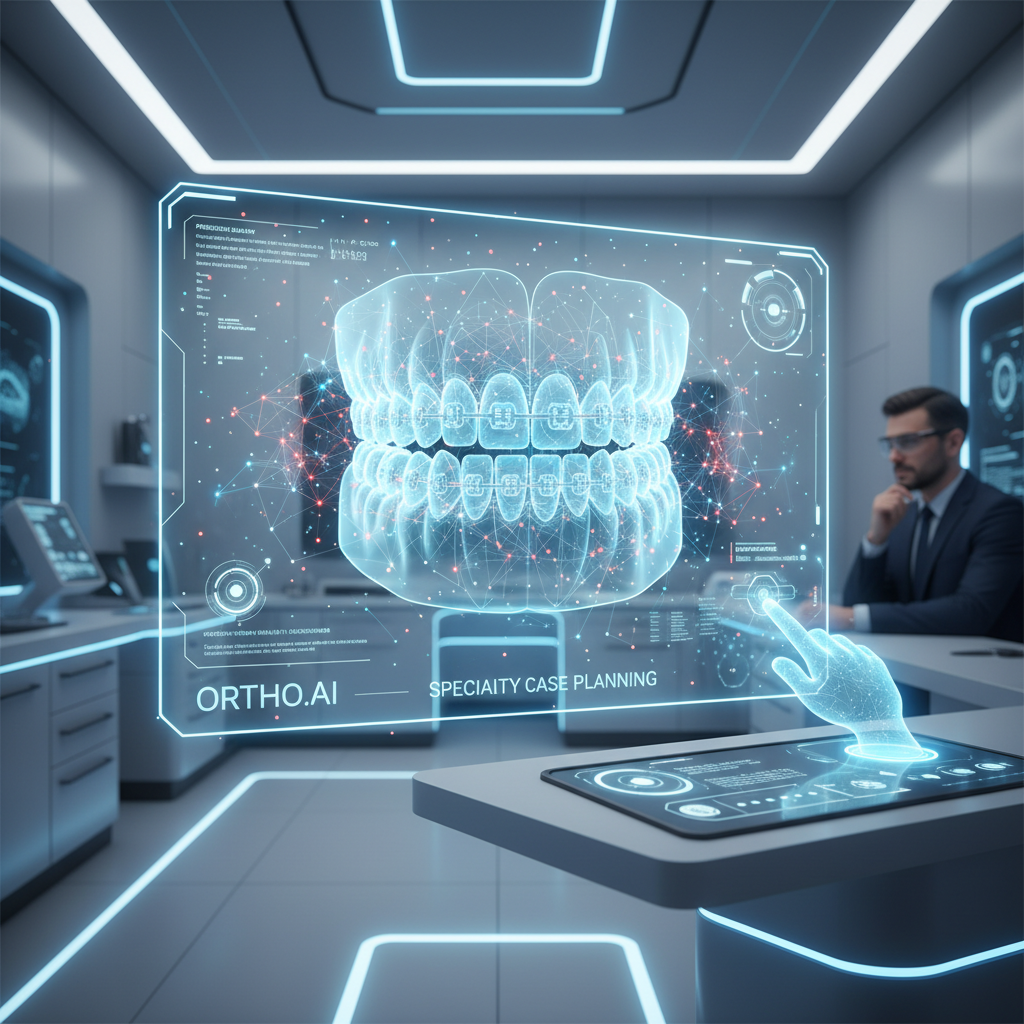
What ai guided braces planning means for you
If you are considering high end orthodontic treatment, you will see the phrase “ai guided braces planning” more and more. At its core, it means your orthodontist is using artificial intelligence together with 3D scans, photos, and X rays to design and refine your treatment.
Instead of relying only on traditional measurements and visual estimates, AI systems compare your smile to thousands of completed cases. These tools can predict how each tooth is likely to move, suggest more efficient tooth paths, and help your doctor choose the best combination of braces, wires, and elastics or clear aligners for you. This approach supports the kind of precise, polished results you expect from boutique orthodontic care and high end orthodontics in Johnson City.
AI does not replace your orthodontist. Current research shows that while AI platforms can generate structured plans, experienced specialists still make better, more comprehensive decisions overall [1]. In practice, AI guided braces planning gives your doctor a more powerful toolkit so your smile can benefit from both advanced technology and expert judgment.
How AI analyzes your smile
From putty impressions to 3D digital models
Traditional orthodontics often began with bulky putty impressions. With ai guided braces planning, your journey usually starts with a digital scan instead. A handheld scanner captures a detailed 3D model of your teeth and bite in a few minutes.
Clinics that use digital scanning report that these models are more precise and more comfortable for you than old style impressions [2]. These scans feed directly into AI software that can:
- Map every tooth and root position
- Measure crowding, spacing, and rotations with very high accuracy
- Simulate how your teeth will respond to different types of forces
You may already be familiar with this style of planning if you have explored digital smile planning in TN or 3D treatment previews. AI simply takes that same data and adds a deeper layer of analysis.
Machine learning models behind the scenes
The AI systems your orthodontist uses are typically powered by machine learning techniques like convolutional neural networks and recurrent neural networks. These models can:
- Detect key anatomical landmarks on your X rays and scans
- Predict how individual teeth will move in response to forces
- Flag patterns that might cause problems, such as root collisions or bite instability
Recent studies show diagnostic accuracy for key orthodontic landmarks up to about 95.47 percent, which supports very detailed planning [3]. For you, that level of precision gives your provider more confidence before any brackets are placed or aligners are printed.
If you are managing complex bite issues or advanced orthodontic cases, this type of predictive modeling can be especially valuable.
How AI guided planning improves accuracy
Optimized bracket placement and wire design
For braces, small differences in bracket placement can have a noticeable impact on your final smile and bite. AI tools analyze tooth shape and angulation, then help your orthodontist:
- Choose the best bracket position on each tooth
- Plan wire bends or custom wire shapes
- Anticipate how your bite will change as the wire is activated
Studies have found that AI-based treatment planning can reach an overall planning accuracy of about 95.47 percent for tooth movements, which can translate into smoother progress and fewer surprises during treatment [4].
If you prefer braces that are as discreet as possible, this same precision applies when you choose esthetic bracket systems or other premium braces options. AI helps your doctor get the most out of these advanced appliances.
Smarter, more efficient aligner planning
If you are interested in clear aligners or cosmetic orthodontic upgrades, ai guided braces planning can significantly influence how many trays you need and how well they fit.
Research shows that AI driven custom aligner fabrication, based on 3D scans, can reduce the number of aligners needed by around 20 percent while lowering discomfort compared to traditional aligner design [3]. AI does this by:
- Calculating the most efficient sequence of small tooth movements
- Designing aligner edges and pressure points more precisely
- Balancing speed with comfort and biological limits
This means you may reach your goal smile with fewer trays, fewer refinements, and a more predictable path, especially when your case is managed in a dedicated orthodontic technology clinic.
Clearer predictions for your final result
One key benefit of ai guided braces planning is the ability to model your entire treatment path before it begins. The software can simulate:
- How each tooth will look at different stages
- How your bite will close and stabilize
- How your smile will frame your lips and face at the end
AI based systems create detailed 3D simulations that show you your expected result, which improves communication and lets you participate more fully in decisions about your treatment goals [5].
If you are aiming for truly smile perfection orthodontics, being able to see and fine tune your plan up front can be reassuring.
Benefits you can expect during treatment
Shorter overall treatment times
When tooth movement is sequenced more efficiently, your total time in braces or aligners can go down. Multiple clinical datasets report that AI powered planning can cut treatment time by roughly 4.3 months, or up to about 26 percent, compared with conventional methods, when other factors are similar [6].
AI helps accomplish this by:
- Avoiding inefficient back and forth movements
- Identifying early where anchorage may be an issue
- Adjusting force levels and directions digitally before you feel them in your mouth
If speed is a priority for you, AI can complement services such as accelerated orthodontics in Johnson City, vibration devices, or advanced wire materials to safely move teeth faster.
Fewer in office visits and disruptions
AI systems are not limited to the planning phase. Many modern platforms support remote monitoring using smartphone photos or at home scan devices. Your orthodontist can review AI flagged changes between appointments and:
- Confirm that tooth movement is on track
- Catch fit issues or broken appliances early
- Decide whether adjustments can wait or should be done sooner
Studies have shown that AI enabled remote monitoring can reduce in person visit counts, for example from a mean of 12.8 down to about 10.2 visits over a course of treatment [3], and some systems report up to 50 percent fewer office visits in specific protocols [4].
For you, that can mean fewer disruptions to work or travel while still maintaining a high level of supervision and care.
AI guided braces planning is not about “less contact,” it is about smarter contact. Your in person time is reserved for the adjustments that genuinely move your treatment forward.
More comfortable, predictable adjustments
Because AI planning helps your orthodontist anticipate how your teeth will respond, they can design forces that stay within biologically comfortable ranges. This usually means:
- Fewer unexpected sore spots or emergency visits
- Less need for major course corrections later
- A smoother transition into your retainers at the end
Clinics using AI guided planning report fewer emergency visits and better adherence to estimated timelines, especially in complex cases [4]. If you have had a disappointing experience with braces in the past, this can be an important advantage as you explore orthodontic retreatment services or retreatment care in orthodontics.
AI and complex or retreatment cases
Addressing prior orthodontic relapse
If you are dealing with shifted teeth after earlier treatment, AI guided braces planning can help your orthodontist understand why relapse occurred and how to correct it with more stability. By comparing old records with current scans, AI tools can:
- Identify which teeth moved and in what direction
- Analyze whether your bite is now overloading specific areas
- Suggest more stable tooth positions and retention strategies
This type of analysis supports targeted orthodontic relapse correction rather than repeating a generic treatment pattern. It also helps your provider design a retainer plan that fits your lifestyle and your risk profile.
Managing advanced orthodontic challenges
If you have more complex needs, such as significant bite discrepancies, missing teeth, or jaw asymmetries, AI guided braces planning offers additional value. AI algorithms trained on large orthodontic datasets can predict complex tooth movements with greater accuracy and speed than traditional methods, which helps in:
- Planning extractions or non extraction alternatives
- Coordinating braces with restorative or surgical care
- Protecting tooth roots and supporting bone during movement
Research confirms that AI can analyze X rays, scans, and photographs in minutes and often detects details that may be missed by manual review alone [5]. Your orthodontist then reviews these findings and integrates them into a custom plan that fits your specific situation.
If you are comparing practices, you can look for those that focus on orthodontic technology refinements and advanced orthodontic cases so you know your case is being managed at a high level.
The role of your orthodontist in an AI world
Why human judgment still matters most
Even though AI can support very detailed planning, current studies are clear that human orthodontists still outperform AI chatbots and automated systems in overall treatment design. In one 2025 pilot study, orthodontists rated a human expert’s treatment plan significantly higher than plans created by ChatGPT, Google Bard Gemini, or Bing Copilot for a complex child case, with p values below 0.001 for both agreement and confidence [1].
The study also showed that:
- AI platforms sometimes recommended incomplete or less optimal approaches
- AI plans could miss clinical subtleties, such as growth potential or cooperation history
- There were no meaningful differences in planning quality between the various AI chatbots
These findings support the view that AI should be an auxiliary tool, not a replacement for experienced clinicians. When you choose a provider who embraces technology while maintaining strong clinical judgment, you gain the best of both worlds.
How your provider uses AI day to day
In a modern luxury orthodontic clinic or boutique orthodontic care setting, your orthodontist might use AI to:
- Pre screen scans and radiographs for issues and opportunities
- Compare multiple treatment scenarios side by side
- Fine tune the end stages of your case through orthodontic finishing touches
- Plan precise refinements, especially when you need refinement treatment in orthodontics
Throughout, your doctor remains the one who understands your overall health, habits, cosmetic priorities, and long term goals. AI simply provides better data and more realistic simulations so you can make informed choices together.
If you are curious about how a specific office applies AI, you can ask:
- What AI tools do you use for planning and monitoring?
- How do those tools change my experience compared to traditional treatment?
- How do you decide when to follow or override AI suggestions?
A confident, technology forward practice should be able to answer these questions clearly.
Is ai guided braces planning right for you?
You are most likely to benefit from ai guided braces planning if you:
- Want a premium, highly customized outcome, including subtle bite and profile improvements
- Have had orthodontic treatment before and are considering orthodontic upgrades in Johnson City or full cosmetic orthodontic upgrades
- Are managing complex bite issues, missing teeth, or significant crowding
- Value efficiency and would like to minimize office visits while maintaining close oversight
- Prefer clear aligners or esthetic appliances but still expect strong, stable results
If that sounds like you, exploring providers who emphasize ai orthodontic planning, premium braces options, and advanced digital workflows can be a smart next step.
When you schedule a consultation, consider it a chance to see how AI, digital scans, and expert clinical care can work together to shape your treatment. With the right partnership, ai guided braces planning helps you move toward a more accurate, efficient, and refined orthodontic result, tailored to your expectations for high end care.