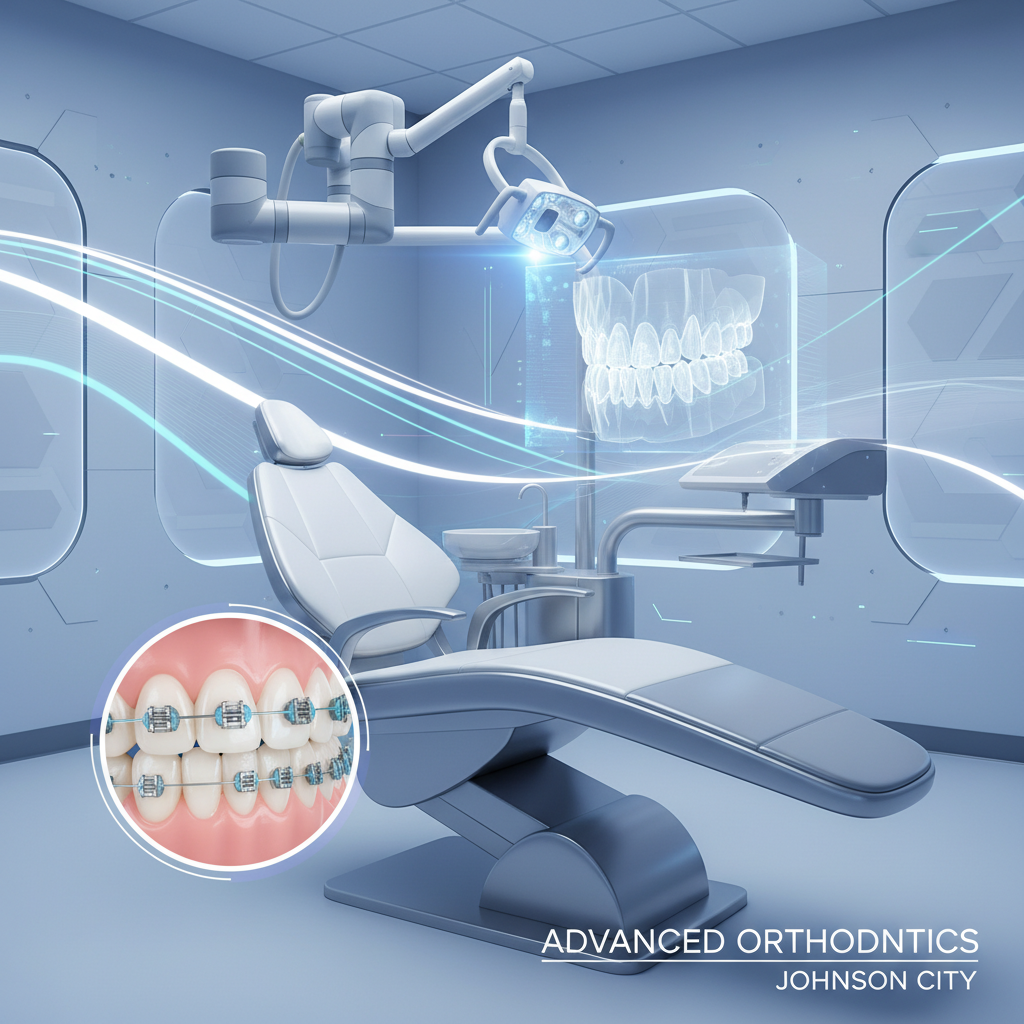
Understanding accelerated orthodontics in Johnson City
If you are exploring accelerated orthodontics in Johnson City, you are likely looking for a way to shorten treatment time without sacrificing results or comfort. Accelerated orthodontic techniques are designed to help your teeth move more efficiently, often in partnership with high-tech braces or Invisalign and advanced digital planning. This can be especially appealing if you have a busy career, upcoming life event, or you simply prefer a faster, more customized path to your ideal smile.
Accelerated orthodontics uses a combination of innovative devices, carefully directed forces, and in some cases minimally invasive procedures to stimulate your bone to remodel more quickly around moving teeth. A recent review reports that accelerated strategies, from non-invasive to surgical, can reduce treatment times by up to 70 percent when used appropriately, while maintaining safety when properly managed by a specialist [1].
To decide if this approach is right for you, it helps to understand how the methods work, what you can realistically expect, and how advanced planning tools like AI orthodontic planning and digital smile planning tn fit into your treatment.
How accelerated orthodontics works
Accelerated orthodontics does not replace braces or clear aligners. Instead, it is a set of tools and techniques that make those systems work more efficiently.
The biology behind faster tooth movement
Tooth movement happens when gentle, continuous pressure causes the bone around your teeth to break down on one side and rebuild on the other. Accelerated techniques stimulate a stronger version of your body’s natural healing response, known as the regional acceleratory phenomenon (RAP). This temporarily increases bone turnover so your teeth can respond more quickly to orthodontic forces [1].
In practical terms, this means you may be able to:
- Change aligners more frequently
- See larger movements between adjustment visits
- Reach your final result months earlier than with conventional mechanics alone
Categories of accelerated techniques
Most options used with accelerated orthodontics in Johnson City fall into three broad groups:
- Invasive surgical approaches
- Minimally invasive surgical or micro-surgical techniques
- Non-invasive device assisted treatments
Each method aims to increase the rate of tooth movement but with different levels of intervention, recovery, and cost. Your orthodontist will match the method to your case, your health, and your comfort level.
Main types of accelerated orthodontic techniques
Not every practice offers all options, but understanding the major categories helps you have a focused conversation at your consultation.
Periodontally accelerated osteogenic orthodontics (PAOO)
Periodontally accelerated osteogenic orthodontics, also called PAOO or Wilckodontics, is one of the best-known accelerated procedures. It combines corticotomies, which are precise cuts in the outer layer of bone, with bone grafting around the teeth to stimulate RAP and increase bone volume. Studies note that PAOO can speed tooth movement two to ten times compared with normal healing and also improve the thickness of supporting bone around teeth [1].
This approach is typically reserved for adults who need significant or complex tooth movement and who want to optimize both speed and long-term bone support.
Piezocision
Piezocision is a minimally invasive alternative that uses a piezoelectric surgical tip to make small, flapless cuts in the cortical bone through tiny incisions in the gum. Since there is no large gum flap to reflect, recovery tends to be quicker and more comfortable compared with traditional corticotomies.
Piezocision can be combined with braces or Invisalign, and research shows it can facilitate rapid orthodontic tooth movement with low morbidity and good patient acceptance [1]. It is often a preferred choice when you want noticeable acceleration without a more extensive surgery.
Microosteoperforations (MOPs)
Microosteoperforations, sometimes performed with proprietary systems such as PROPEL, involve creating a series of very small perforations in the bone through the gum near selected teeth. These perforations stimulate cytokine release, which in turn increases osteoclastic activity and speeds bone remodeling [1].
MOPs are:
- Minimally invasive
- Office based
- Compatible with both braces and Invisalign
Because the biologic effect reduces over time, MOPs are often repeated every two months for as long as acceleration is needed, particularly for difficult or stubborn tooth movements.
Non-invasive device assisted treatments
If you prefer to avoid any surgical procedure, there are non-invasive options that use gentle vibrations or light therapy to stimulate bone activity around your teeth.
Two frequently referenced examples include:
- AcceleDent. An FDA cleared device that delivers gentle cyclic micro-pulses to your teeth for about 20 minutes daily, used in combination with braces or aligners. Clinical studies suggest it can accelerate tooth movement and may reduce risks like root resorption or mini implant failure in some patients [1].
- Low-level laser therapy and infrared light. A review found that pairing braces with minimally invasive corticotomy and tools like low-level laser therapy or infrared light increased the rate of movement by 43 to 50 percent without reported adverse effects in the included studies [2].
These methods are often combined with advanced systems in a modern orthodontic technology clinic, where digital planning and precise force application are already in place.
What accelerated orthodontics can change
For many people, the most important question is simple: how much faster will treatment be?
Potential time savings
Traditional comprehensive orthodontic treatment often spans 18 to 36 months. With properly selected accelerated techniques, some practices report that overall treatment can sometimes be shortened to roughly 6 to 12 months in suitable cases [2]. Other reports suggest treatment may be shortened by three to eight months or that specific systems can cut treatment time by up to 50 percent [3].
Your individual outcome depends on several factors:
- Complexity of your bite and tooth positions
- Your age and bone metabolism
- The type of appliance you choose, from premium braces options to advanced Invisalign protocols
- How consistently you follow your orthodontist’s instructions
Impact on treatment experience
Acceleration does not only affect the calendar. It can also influence what your day to day experience feels like:
- More frequent visits. Rapid movement usually requires more adjustments in a shorter timeframe compared with standard treatment protocols [3].
- Different aligner schedules. With Invisalign, you might change trays weekly rather than every two weeks, as already used by some Johnson City practices to help speed care [4].
- Closer monitoring. A high tech, boutique orthodontic care model may use digital check ins and AI supported tracking to ensure fast movement stays within safe biological limits.
When you combine accelerated methods with tools like ai guided braces planning and orthodontic technology refinements, you can often achieve both speed and precision in the same plan.
In many cases, accelerated orthodontics is less about “rushing” treatment and more about coordinating biology, technology, and technique so your teeth move in the most efficient way your body can safely support.
Accelerated orthodontics options in Johnson City
Johnson City and the greater Tri Cities area offer several practices that integrate accelerated approaches into modern orthodontic care.
Many local providers use advanced 3D imaging and digital scanning to build personalized Invisalign or braces plans, which makes it easier to layer in acceleration protocols efficiently [4]. At some practices, weekly tray changes, micro-osteoperforations, or vibration devices are combined with clear aligners or custom braces to streamline your case.
In addition, practices that focus on high end orthodontics johnson city often pair these tools with:
- Customized esthetic brackets or esthetic bracket systems
- 3D printed indirect bonding trays or fully customized braces
- Digital smile perfection orthodontics workflows that simulate your outcome before you begin
Early intervention options, such as palatal expanders for children, also function as a type of “biologic acceleration” because they guide jaw growth at the optimal age, which can shorten or simplify later treatment. Local providers report active expansion typically lasts 2 to 4 weeks with a total expansion course around 6 to 8 months in growing patients, supporting more efficient development [5].
Ideal candidates for accelerated orthodontics
Accelerated orthodontics is not automatically the best choice for every smile. Before you commit, it is important to consider your health, goals, and the starting condition of your teeth and jaws.
When acceleration is a good fit
You may be an excellent candidate if you:
- Are generally healthy with good gum and bone support
- Want to shorten overall treatment time for personal, professional, or health reasons
- Are considering retreatment or orthodontic relapse correction and want a more efficient second course of care
- Value advanced technology and are open to procedures or devices that enhance efficiency
- Are already interested in cosmetic orthodontic upgrades and want to coordinate esthetics with speed
Patients who have previously had orthodontic treatment and now need orthodontic retreatment services or retreatment care orthodontics often appreciate acceleration, since they already understand what standard pace treatment feels like.
When accelerated orthodontics may not be recommended
Certain medical or dental conditions make acceleration less suitable. According to clinical summaries, people with gum disease, uncontrolled diabetes, osteoporosis, severe malocclusions, temporomandibular joint disorders, or weak immune systems may not be ideal candidates due to higher risks of complications, including infection, root resorption, or bone loss [6].
In those situations, a careful, traditional approach, possibly with advanced orthodontic cases expertise and staged orthodontic upgrades johnson city, can protect your health while still improving your smile.
Costs, insurance, and value considerations
Cost is an important part of deciding whether accelerated orthodontics in Johnson City fits your plans.
Typical cost ranges
Published estimates indicate that accelerated orthodontic add ons can range from roughly 800 to 6,000 dollars, depending on the type of technique used. This is comparable to or slightly less than some ranges quoted for comprehensive braces alone, which can fall between about 3,000 and 7,000 dollars for standard treatment in many markets [2].
Local providers in Johnson City cite braces treatment ranges from about 2,500 to 10,000 dollars, with most patients paying manageable monthly installments such as 99 to 250 dollars per month through interest free financing [7]. Many practices also accept HSA or FSA funds and may work with lenders like CareCredit to spread out costs.
There is no single figure that applies to every case. Your final fee will depend on:
- The complexity and length of your base treatment
- Whether you choose braces or Invisalign
- Which accelerated methods are recommended
- Any additional orthodontic finishing touches or esthetic enhancements you choose
Insurance coverage
Most dental insurance plans help cover a portion of medically necessary orthodontic care up to specific lifetime maximums. For example, some Tennessee insurers contribute between 1,500 and 3,000 dollars toward braces for eligible patients, and some practices assist with TennCare for medically necessary treatment in younger patients [7].
However, many policies do not cover accelerated procedures or devices themselves and consider them elective. Your orthodontic office can review your benefits and give you a clear breakdown of what is and is not covered.
How advanced planning tools support accelerated care
When your goal is faster treatment without compromise, how your case is planned matters as much as the acceleration method you select. This is where high tech tools come in.
AI assisted and digital smile planning
Modern practices increasingly use ai orthodontic planning and digital smile planning tn to simulate tooth movements before you start. These systems help:
- Map out precise tooth-by-tooth movements
- Predict how changes will affect your bite and facial esthetics
- Identify potential problem spots where acceleration may require extra caution
Layering accelerated techniques on top of this detailed digital roadmap allows your orthodontist to move efficiently while still protecting roots and bone support. It also makes later refinement treatment orthodontics more predictable if small adjustments are needed near the end.
Technology driven braces and aligner systems
If you prefer braces, you can pair acceleration with premium braces options or esthetic bracket systems, and with tools like custom archwires, 3D printed brackets, or indirect bonding trays. For aligner treatment, AI enhanced planning and high frequency aligner changes can be combined with vibration devices, MOPs, or piezocision.
This integrated approach aligns well with a luxury orthodontic clinic model, where the goal is not just straight teeth, but a carefully designed, efficient, and comfortable experience from start to finish.
Deciding if accelerated orthodontics is right for your smile
Choosing accelerated orthodontics in Johnson City is ultimately a personal decision that should be made with a specialist who understands your goals and your medical history.
You may find it is an excellent fit if you:
- Want to minimize total time in active appliances
- Value technology driven, highly customized care
- Are committed to attending more frequent visits when necessary
- Prefer a premium, results focused approach to your smile and bite
On the other hand, if you have significant health concerns, an extremely complex bite, or limited flexibility in your schedule, you might prefer standard pacing supported by advanced digital planning and selective orthodontic technology refinements. Even without formal acceleration, a high level of planning can still shorten treatment compared with older methods.
During a consultation, you can review:
- Baseline and accelerated timelines for your specific case
- Available acceleration options and their level of invasiveness
- Cost, financing, and insurance implications
- How acceleration interacts with any cosmetic orthodontic upgrades you are considering
If you are already in treatment and concerned about pace, you can also ask about orthodontic retreatment services or targeted upgrades that may improve efficiency partway through.
With the right combination of expert guidance, digital planning, and carefully chosen accelerated techniques, you can decide on an approach that respects your biology, your schedule, and your long term oral health, while moving you closer to the smile you have in mind.