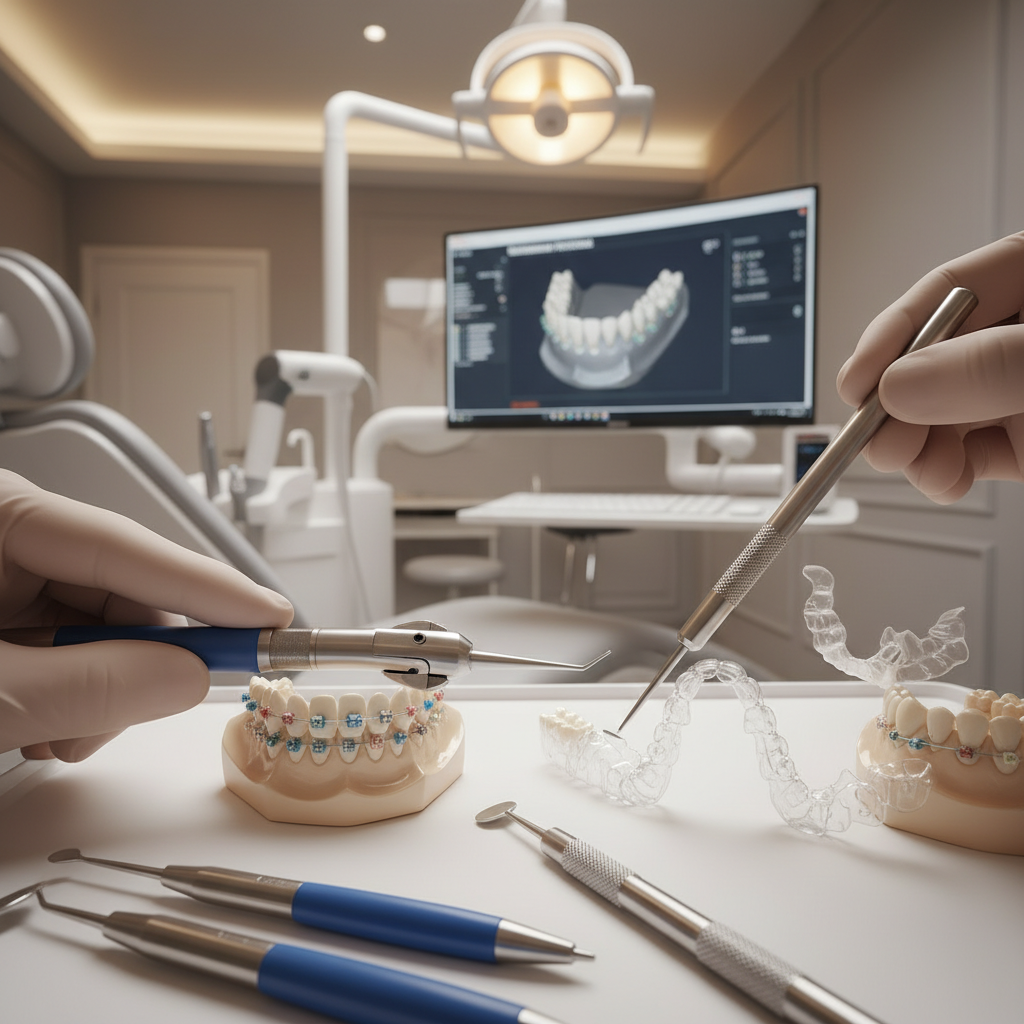
What retreatment care orthodontics actually means
If you are thinking about retreatment care orthodontics, you are not alone. As access to braces and aligners has increased, more people are returning years later because they are unhappy with their results or have experienced relapse. A recent study found that about one‑third of orthodontic patients would consider orthodontic re‑treatment, most often to improve their smile again and correct shifting teeth [1].
Retreatment care orthodontics focuses on carefully correcting problems that remain after previous orthodontic work. This can include teeth that shifted back, bite issues that were never fully resolved, or results that no longer match your aesthetic expectations. In a high‑end setting, retreatment is not just “doing braces again.” It is a planned, data‑driven upgrade of both function and appearance, often supported by advanced diagnostics, ai orthodontic planning, and refined appliance choices.
You may be an ideal candidate if you want more precise finishing, are looking at cosmetic orthodontic upgrades, or simply want your smile to match how you see yourself today, not just how it looked at the end of your first treatment.
When you should consider orthodontic retreatment
You do not need to wait for a crisis to explore orthodontic retreatment services. Specific patterns are common in patients who benefit from retreatment care orthodontics.
Common reasons to seek retreatment
You may want to consider a consultation if you notice any of the following:
- Teeth that have shifted or crowded again after braces or aligners
- Gaps reopening between teeth
- Bite changes such as overbite, underbite, or crossbite returning
- Jaw discomfort, TMJ symptoms, or difficulty chewing
- A smile result that never matched what you expected
- Visible wear, chipping, or new spacing that affects your confidence
Teeth naturally tend to move back toward their original positions. Research shows that relapse often begins within weeks after braces are removed and can continue slowly for years if retainers are not worn consistently [2]. That is why many adults who had braces as teens later explore orthodontic relapse correction.
Cases that especially benefit from high‑end care
You gain the most from a premium, technology‑driven clinic if you:
- Have already had one or more full rounds of treatment
- Have complex bite problems or jaw discrepancies
- Previously experienced root resorption or gum issues
- Expect a very specific cosmetic outcome
- Want access to premium braces options and discrete esthetic systems
In these situations, you are not just correcting teeth. You are correcting history. That requires careful diagnostics and planning at a level provided by a specialized orthodontic technology clinic or luxury orthodontic clinic.
How your retreatment evaluation works
Retreatment begins with understanding exactly what went wrong, what has changed over time, and what you want now. A thorough evaluation is essential before anyone recommends specific appliances or timelines.
Step 1: Reviewing your orthodontic history
Your orthodontist will want to know:
- What treatments you had before, and when
- Whether you wore your retainers, and for how long
- Any discomfort, root resorption, or gum problems that occurred previously
- What you liked and disliked about your prior results
This history is not about assigning blame. It is about identifying risk factors and planning a safer, more predictable retreatment. For instance, if your roots shortened in earlier treatment, that must shape your new goals since additional root resorption is more likely on retreatment [3].
Step 2: Advanced diagnostics and digital planning
Modern retreatment care orthodontics relies on a much deeper diagnostic layer than was used in many patients’ first treatments. This often includes:
- High‑resolution digital scans instead of traditional impressions
- Comprehensive X‑rays and, where appropriate, 3D CBCT imaging
- Photographs and video to evaluate your smile in motion
- Bite analysis, jaw tracking, and function assessment
Clinics that specialize in orthodontic technology refinements can combine this information with ai guided braces planning and digital smile planning tn. Artificial intelligence tools can simulate different treatment scenarios, helping you see how subtle changes to tooth position will affect your smile and profile before treatment even begins.
Step 3: Identifying specific retreatment problems
From your exam and records, your orthodontist looks for:
- Misaligned or rotated teeth that were never fully corrected
- Bite discrepancies that affect chewing or jaw joints
- Asymmetries between left and right sides
- Black triangles, uneven gum lines, or tooth size mismatches
- Early wear patterns or signs of clenching and grinding
Research on finishing retreatment cases emphasizes the importance of a checklist that covers oral health, esthetics, occlusion, function, and long‑term stability before appliances are removed [4]. In quality‑focused clinics, that mindset is applied from the very start of retreatment planning.
Retreatment orthodontic options you can choose
Once your orthodontist understands the full picture, you can discuss a menu of retreatment options. In a high‑end practice, these are tailored to your anatomy, your lifestyle, and the level of precision you want.
Traditional braces and upgraded bracket systems
Conventional braces remain one of the most effective tools for complex retreatment, particularly when you need significant tooth movement or bite correction. For adults and appearance‑conscious patients, you are not limited to standard metal brackets.
You may be offered:
- Low‑profile metal systems that are more comfortable and easier to clean
- Esthetic bracket systems using tooth‑colored ceramic materials
- Lingual or hidden braces that sit on the tongue side of teeth for true invisibility
Traditional metal braces are still highly effective in adult retreatment, closing gaps and correcting crowding when worn as directed [5]. Ceramic braces provide a more discreet look, although they can be more fragile and may stain from dark drinks and foods [5].
The difference in a boutique setting is the level of detail placed on orthodontic finishing touches and bracket positioning. Careful repositioning and fine archwire adjustments are especially important in retreatment, where tooth anatomy and previous compromises create more variation [4].
Clear aligners and cosmetic refinement
If your relapse is moderate and your bite is relatively stable, clear aligners can be a powerful retreatment tool. They are:
- Removable for eating and cleaning
- Nearly invisible in social and professional settings
- Well suited to precise, planned micro‑movements
Clear aligners are particularly attractive when your main priorities are cosmetic fine‑tuning and comfort. They work very well when paired with refinement treatment orthodontics to perfect tooth positions late in the process.
Clinical experience shows that aligners are ideal for mild to moderate adult relapse when worn as prescribed, although consistent wear is critical to success [5].
Hidden and accelerated solutions
Some patients want highly advanced or ultra‑discreet options. In that case, retreatment care orthodontics can include:
- Lingual systems that attach to the back of teeth
- Smartwire or automated appliances that self‑adjust
- Accelerated orthodontics johnson city protocols that shorten total treatment time with vibration, micro‑osteoperforation, or other adjuncts
InBrace and similar “behind the teeth” solutions use custom Smartwire technology to move teeth automatically with minimal visible hardware, and some adult retreatments with such systems can be completed in just a few months [5].
When you combine these systems with ai orthodontic planning and a boutique orthodontic care environment, you get an efficient process that respects both your time and your aesthetic expectations.
Ortho‑surgical and advanced cases
In some situations, tooth movement alone cannot fully solve the problem. You might have a skeletal discrepancy, severe open bite, or jaw relationship that requires combining braces with jaw surgery. High‑end practices that handle advanced orthodontic cases can coordinate these complex plans.
Clinical reports show that:
- Two‑phase retreatment can correct severe anterior open bite and transverse deficiencies and still be stable years later [6]
- Combined ortho‑surgical retreatment can significantly improve facial harmony, smile esthetics, and occlusion with stability several years after treatment [6]
If you fit into this category, you should work with a clinic experienced in high end orthodontics johnson city and collaborative care with surgeons.
Special considerations and risks in retreatment
Retreatment is predictable when handled carefully, but it is not simply “starting over.” Your teeth and supporting structures have a history that must be respected.
Root resorption and bone health
If your previous X‑rays showed root resorption, your orthodontist will approach retreatment with special caution. Research indicates:
- Teeth that already experienced root shortening are at higher risk for further resorption in retreatment
- Thin, tapered, or curved roots, history of trauma, and habits like bruxism increase this risk
- Radiographs at 6 to 12 month intervals are recommended to detect early changes and adjust treatment as needed [3]
If severe root resorption is seen during progress checks, active orthodontic forces should be paused for at least three months to allow some repair, and your treatment objectives may be modified [3].
Gum health, pain, and cooperation
Your gums and bone must be healthy enough to support additional tooth movement. Periodontal health, comfort, and your ability to maintain excellent oral hygiene matter a great deal. Pain and gum issues are common reasons people discontinue orthodontic care, and this is especially important in retreatment [3].
Your cooperation also shapes what is realistically possible. For example, if consistent elastic wear is unlikely, your orthodontist may choose slightly different mechanics even if it means a minor compromise, such as limited proclination of lower incisors in some bite corrections [4].
In a smile perfection orthodontics environment, these trade‑offs are discussed openly so that your goals and your lifestyle are aligned with the final plan.
How long retreatment takes and what it feels like
Timeframes for retreatment care orthodontics are usually shorter than your first full round of braces, but they vary based on complexity and your goals.
- Mild to moderate relapse treated with aligners or limited braces can often be corrected in several months
- More extensive crowding or bite re‑correction may take 12 to 18 months
- Ortho‑surgical and complex skeletal cases typically follow similar timelines to primary comprehensive treatment
At a technology‑focused practice that offers orthodontic upgrades johnson city, you may be able to shorten active treatment with carefully selected appliances, advanced wires, or accelerated orthodontics johnson city protocols.
What you experience day to day usually includes:
- Periodic adjustment or aligner change appointments
- Temporary soreness when new forces are applied
- Detailed guidance on hygiene to protect your gums and enamel
- Regular progress monitoring, especially if you have any risk factors
Clinics that emphasize boutique orthodontic care typically schedule enough chair time for you to ask questions, review digital progress, and understand each step instead of simply “tightening and leaving.”
Retainers and keeping your new result stable
Retreatment is only fully successful if your improvements stay stable. That is why retention planning is one of the most important conversations you will have.
Why relapse is so common
After braces are removed, the bone around your roots is immature and needs at least a year or more to fully remodel. During that period, your teeth are particularly vulnerable to movement, which is why full‑time retainer wear is usually recommended for the first several months to one year [2].
Even after the bone has matured, the fibers around each tooth keep a kind of “memory” of where your teeth used to be and can apply forces that slowly pull them back [2]. This is why many orthodontists now recommend some form of lifelong retention.
Despite these facts, in one study only about 20 percent of patients wore their retainers for even the minimally recommended 6 to 12 months [1]. That pattern explains a large share of adult retreatment demand.
Building a smarter retention plan
Your retention can be customized more precisely the second time around. Modern research and clinical protocols emphasize:
- Maintaining lower front tooth width and arch form as much as possible before removing appliances to support stability [4]
- Stronger bonded retention for high‑risk cases, for example, multi‑strand wire bonded across all six lower front teeth or even extending to premolars in difficult retreatment cases [4]
- Clear, repeated education about retainer importance and realistic wear expectations, which has been shown to improve long‑term stability and reduce re‑treatment rates [1]
A clinic experienced in orthodontic relapse correction and orthodontic technology refinements will discuss your options for removable, fixed, or hybrid retainers and will plan monitoring intervals that fit your risk level.
The most advanced retreatment plan still depends on one simple habit: consistent, lifelong retainer use.
What you can expect from a high‑end retreatment clinic
Retreatment is not just an opportunity to correct previous issues. It is an opportunity to upgrade your entire orthodontic experience.
In a luxury orthodontic clinic or orthodontic technology clinic that focuses on premium retreatment, you can expect:
- A calm, private environment with extended consultation time
- Access to premium braces options, high‑end aligners, and esthetic systems
- Integrated ai guided braces planning and digital smile planning tn for precise forecasting
- Thoughtful, collaborative discussions about function, esthetics, and long‑term maintenance
- A strong emphasis on orthodontic finishing touches so your outcome feels complete, not “good enough”
Many patients report that retreatment, when done at this level, is more comfortable, more transparent, and more satisfying than their original orthodontic care. It also tends to have a significant positive impact on self‑esteem and oral health‑related quality of life, as documented in recent retreatment case studies [6].
If you are ready to explore whether retreatment care orthodontics is right for you, consider meeting with a practice that specializes in orthodontic retreatment services and advanced orthodontic cases. With the right planning and technology, you can move beyond “fixing what went wrong” and toward the upgraded, stable smile you originally hoped for.