What digital smile planning in TN means for you
When you search for “digital smile planning TN,” you are usually looking for two things: confidence in the result and clarity about the process. Digital smile planning delivers both. It uses advanced imaging, 3D scans, and smile design software so you can see a realistic preview of your future smile before any treatment begins.
Across Tennessee, practices are using this technology to plan veneers, aligners, implants, crowns, and high‑end orthodontic treatments with more precision and predictability than traditional methods alone [1]. For you, that means fewer surprises, more control over your appearance, and greater peace of mind as you move into specialty or premium care.
How digital smile planning works
Digital smile planning follows a structured sequence. Each step is designed to make your treatment more accurate and more personal.
Step 1: Digital records and 3D imaging
Your visit usually starts with comprehensive records. Depending on the office, this can include:
- High‑resolution photos and short videos of your smile and face
- 3D intraoral scans instead of traditional impressions
- X‑rays or 3D cone beam scans for bone and root evaluation
For example, Dickson offices use a small handheld scanner to create detailed 3D models of your teeth and bite. You and your doctor can view these images together in real time on a screen, which improves accuracy and comfort compared to traditional molds [2].
In more complex cases, 3D CBCT imaging is used to view teeth, roots, nerves, and jaw structures in three dimensions. Practices like Tennessee Family Dental use CBCT to plan implants, root canals, and TMJ treatment, and the same data can support advanced orthodontic planning [3].
Step 2: Smile analysis and aesthetic planning
Next, your doctor evaluates:
- Tooth shape, size, and proportion
- Gum levels and symmetry
- Alignment and spacing
- How your smile fits your lips and facial features
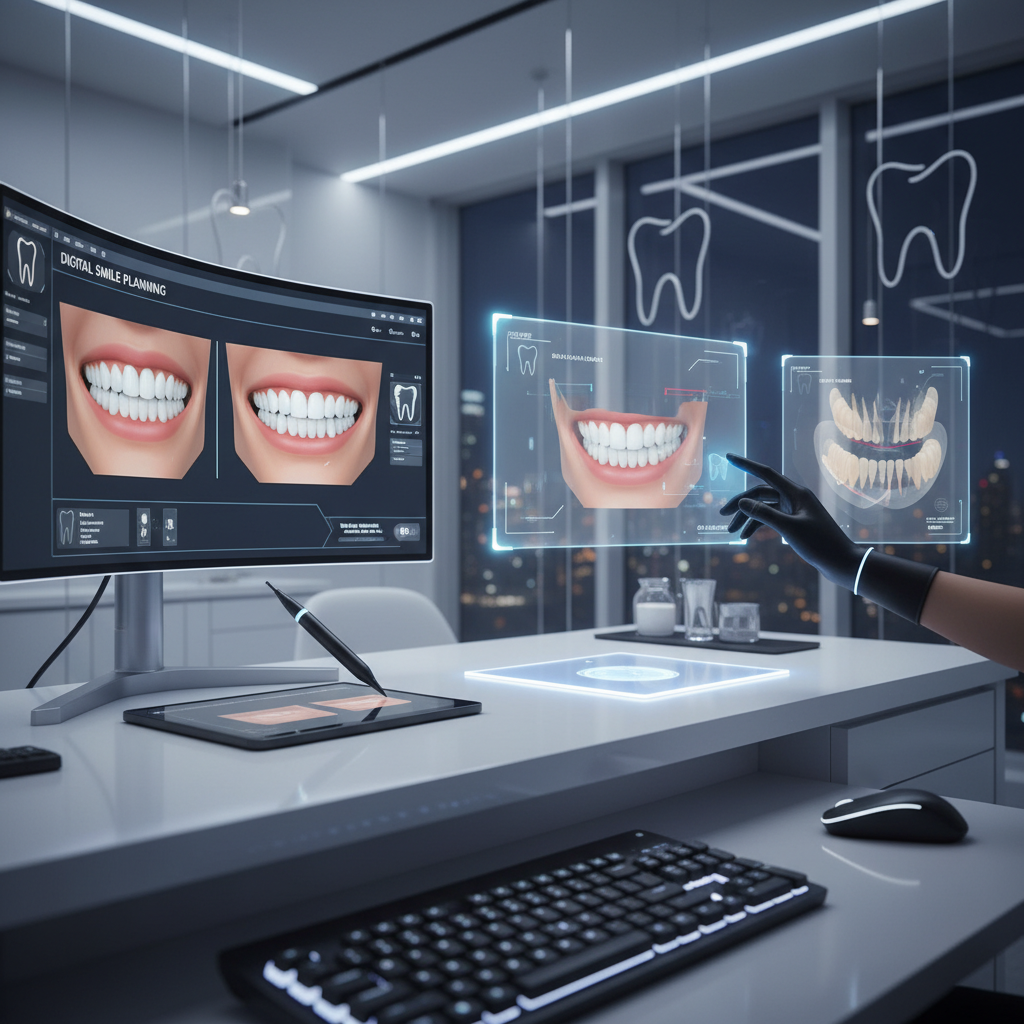
Digital Smile Design (DSD) software allows the team to overlay new teeth or alignments on top of your existing smile. In Hixson, for instance, digital imaging is used to simulate the final outcome by placing images of new teeth onto your current photos so you can see potential results before any procedure begins [4].
This stage is where your goals matter most. You talk through how white you want your teeth, what kind of shape you prefer, and whether you are aiming for subtle refinement or a noticeable transformation.
Step 3: Treatment simulation and preview
Once your dentist or orthodontist has your scans and aesthetic preferences, they create one or more digital treatment scenarios. These simulations might show:
- How your teeth could look after a full orthodontic correction
- The improvement from veneers or bonding on specific teeth
- The impact of implants, crowns, or gum contouring
Practices using Digital Smile Design often present a lifelike preview, not just a generic “before and after.” In Hixson, some patients become emotional when they see how dramatically their new smile could change their appearance and confidence [4].
In Nashville, cosmetic practices rely on similar technology to plan smile makeovers that may include veneers, whitening, bonding, implants, and crowns. High‑resolution 3D data and digital case planning help protect your investment by making sure the design is right before treatment ever starts [5].
Step 4: Converting the plan into precise treatment
Once you approve a digital design, your team uses that plan to guide your actual treatment. Depending on your needs, this can involve:
- Aligners or braces planned with detailed 3D tooth movements
- Surgical guides for precise implant placement
- Custom templates or wax‑ups for veneers and crowns
- Bite adjustments guided by the digital model
Some Tennessee practices also use CEREC technology to design and place ceramic crowns in a single visit, directly from digital scans. In Brentwood, for example, CEREC crowns are crafted from 3D images to match your smile without messy impressions or temporaries [6].
If you are considering high‑end orthodontic options, digital smile planning often pairs with ai orthodontic planning or ai guided braces planning to stage each tooth movement with remarkable precision.
Why digital smile planning is ideal for specialty and high‑end orthodontics
When your case is complex or your expectations are high, you benefit the most from detailed planning. Digital smile planning supports that in several ways.
Better communication and collaboration
You do not have to guess what phrases like “broader arch” or “gingival recontouring” will actually look like. Instead, you and your doctor review a visual model together.
DSD and similar tools are specifically designed to:
- Improve communication between you and your provider
- Help you give feedback on tooth shape, length, and alignment
- Reduce confusion and misaligned expectations [1]
This collaborative process fits well with boutique orthodontic care and luxury orthodontic clinic models, where your preferences and lifestyle are central to every decision.
Greater predictability and accuracy
Digital planning does more than make things look good on a screen. It also tightens clinical accuracy. Practices using DSD have reported high alignment between digital previews and final results, with very small variation [7].
In implant and full‑mouth cases, integrating 3D CT scans, intraoral scans, and facial photos improves planning accuracy and reduces clinical errors [7]. The same level of precision can be applied to:
- Complex bite corrections
- Advanced orthodontic cases with prior extractions or jaw asymmetry
- Orthodontic retreatment services where you already have restorations, implants, or prior orthodontics
If you are returning for orthodontic relapse correction or retreatment care orthodontics, detailed digital models help your provider plan around old work and minimize risk.
Faster, more efficient treatment pathways
Digital workflows can reduce total treatment time in some cosmetic and restorative cases. One DSD‑based practice reports initial designs in 20 to 30 minutes and significant reductions in lab and chair time for complex smile makeovers [7].
In orthodontics, these efficiencies support services like:
- Accelerated orthodontics johnson city that rely on optimized movement planning
- Orthodontic technology refinements that shorten later adjustment phases
- Refinement treatment orthodontics to fine‑tune your result without guesswork
You are still moving teeth safely, but the path can be smoother and more streamlined.
With digital smile planning, your orthodontist is not just moving teeth, they are engineering a result that works for your face, bite, and long‑term oral health.
Options digital smile planning can support
Digital planning is not a single procedure. It is a planning layer that strengthens many high‑end treatment options.
Premium braces and esthetic systems
If you are considering advanced bracket systems, digital planning can help you weigh your choices. For example, you might compare:
- Clear ceramic brackets for a discreet look
- Low‑profile metal systems for efficiency and durability
- Fully customized braces planned around your specific tooth anatomy
Planning tools integrate well with premium braces options and esthetic bracket systems, since your provider can simulate how each option will impact your smile line, lip support, and bite.
Cosmetic orthodontic upgrades and finishing
If you already have fairly straight teeth but want a more refined look, digital smile planning supports:
- Small alignment changes with clear aligners
- Cosmetic orthodontic upgrades like arch form broadening or midline correction
- Orthodontic finishing touches to correct minor rotations or black triangles
A detailed digital model makes it easier to see which minor changes will actually make a visible difference. It also helps your doctor avoid over‑treating, which is especially important when you are starting from a good baseline and aiming for “smile perfection.”
If that is your goal, you may want to explore services aligned with smile perfection orthodontics or high end orthodontics johnson city, where digital planning is standard.
Retreatment and complex correction
If you have had braces or aligners before and your teeth have shifted, or your original bite was never fully corrected, you may worry about starting over. Digital planning can show you:
- How much improvement is possible now
- What it would take to correct unfinished or relapsed issues
- How your current crowns, implants, or veneers will interact with new tooth movement
This approach is especially useful when you need orthodontic retreatment services or are dealing with complicated orthodontic upgrades johnson city scenarios. By previewing different retreatment paths, you can make an informed choice rather than simply repeating what did not work last time.
How Tennessee practices are using digital smile planning
Tennessee is seeing rapid adoption of digital dentistry and smile design. While each office uses its own systems, several themes are consistent across the state.
Hixson: Emotional, visual smile previews
In Hixson, digital imaging is used to overlay new teeth onto your current smile photographs. This gives you a realistic preview before any procedure starts, from a single crown to full mouth reconstruction [4].
Patients are encouraged to collaborate closely on their treatment plan, which can be emotionally powerful. Some people break down in tears when they see how transformative their future smile could be [4].
Nashville: Comprehensive digital smile makeovers
In Nashville, digital smile planning pairs with comprehensive cosmetic offerings. 3D imaging and scanning are used to design smile makeovers that may include veneers, whitening, bonding, crowns, and implants, all calibrated to your facial features [5].
Costs can range widely, for example from a few hundred dollars per crown up to around two thousand dollars per veneer, depending on case complexity [5]. Many offices offer financing through programs like CareCredit so you can structure payments over time.
Brentwood and Middle Tennessee: Chairside crowns and integrated design
In Brentwood, some practices combine Digital Smile Design with CEREC same‑day crowns. High‑resolution images and software create a virtual simulation of your future smile, then 3D scans feed directly into in‑office milling machines to produce ceramic crowns in a single visit [6].
Across Middle Tennessee, CBCT imaging, CEREC scans, and free digital smile consultations are also used to visualize treatment outcomes and support more confident decisions [3].
Statewide: Cost, value, and long‑term benefits
Nationally, digital smile design smile makeovers often range from about 800 to 2000 dollars per tooth, depending on which combination of veneers, bonding, orthodontics, or implants you need [8].
While the upfront cost of digital planning and DSD‑based care can be 30 to 40 percent higher than traditional methods, the technology can reduce adjustments and additional appointments. Over time, that can save both money and time, especially when you are investing in complex, high‑end work [9].
Is digital smile planning right for you?
Digital smile planning is especially helpful if you:
- Want a high level of control over the cosmetic outcome
- Are considering a significant investment in veneers, implants, or advanced orthodontics
- Have a complex history with previous orthodontic or restorative work
- Feel anxious about “not knowing” what the result will look like
If your goals include a premium, customized result, pairing digital planning with an orthodontic technology clinic or orthodontic technology refinements can give you added reassurance. You see your destination clearly, and every step of your treatment is designed around that vision.
How to move forward with digital smile planning in TN
When you are ready to explore digital smile planning in Tennessee, here is how you can proceed:
-
Clarify your priorities
Decide whether your top concern is appearance, bite comfort, speed of treatment, or long‑term stability. This helps your provider tailor your plan and recommend options such as premium braces options or accelerated orthodontics johnson city. -
Look for digitally focused practices
Ask if the office offers 3D scans, digital smile previews, and AI‑driven planning similar to ai orthodontic planning. Clinics that invest heavily in digital tools are more likely to deliver the level of precision and customization you want. -
Ask to see simulations and case examples
Before you commit to any specialty or high‑end solution, ask your provider to show you digital simulations of your case and examples of similar patients. This is particularly valuable if you are aiming for smile perfection orthodontics or planning complex advanced orthodontic cases. -
Review the full plan, including refinements
A complete digital smile plan should include how your provider will handle mid‑treatment adjustments and finishing. Talk about refinement treatment orthodontics and orthodontic finishing touches so you know your final details are covered. -
Discuss cost, timing, and maintenance
Make sure you understand the total investment, expected timeline, and how your results will be maintained after treatment. If you have had previous relapse, confirm that your plan includes robust retention to avoid needing orthodontic relapse correction in the future.
Digital smile planning in TN gives you more than a digital picture. It offers a structured, transparent way to reach the smile you envision, whether you are upgrading an already good result or correcting a complex bite. With the right technology and a team that listens closely, you can move into high‑end orthodontic and cosmetic treatment with genuine confidence in where you are headed.