Understanding orthodontic relapse
If you finished braces or clear aligners and now see your teeth shifting again, you are probably dealing with orthodontic relapse. Orthodontic relapse correction focuses on bringing teeth back into ideal alignment after they have started to drift toward their old positions. This is very common, even years after treatment, and it is not a sign that you failed or that your first treatment was pointless.
Orthodontic relapse is most closely linked to inconsistent or skipped retainer wear. When braces or aligners come off, your teeth sit in relatively immature bone and soft tissue that still needs time to remodel and stabilize. If retainers are not worn as prescribed, those tissues can pull the teeth back toward their original alignment, as highlighted by Diamond Braces in 2024 [1].
You are not alone if you notice changes. More than half of patients experience some degree of relapse within 10 years of treatment, according to Fredericksburg Orthodontics in Virginia [2]. The key is to recognize what is happening and explore the right level of correction for your situation.
Why your teeth relapse after braces or aligners
Relapse happens for several biological and lifestyle reasons. Understanding them helps you choose a solution that is realistic and long lasting.
Role of retainers and tissue memory
After braces or aligner treatment, the bone around your teeth is still remodeling. San Antonio Orthodontics explains that this bone can take a year or more to fully mature, which means your teeth are especially vulnerable to movement right after treatment [3]. During this time your retainers act as a holding system, keeping teeth steady while the bone and gums adapt.
Your periodontal ligaments also have an elastic “memory.” These tiny fibers connect teeth to bone and remember where your teeth used to be. For years after treatment, they can exert subtle forces that try to pull teeth backward, which is why many orthodontists now recommend some level of lifetime retainer wear [3].
If you found full‑time wear difficult or stopped wearing your retainer and it no longer fits, you are in the most common relapse group. Insufficient retainer use remains the main cause of relapse worldwide [2].
Other factors that push teeth to move
Even if you were diligent with your retainer, you can still see movement over time. Some contributing factors include:
- Natural aging and subtle jaw changes
- Gum disease or bone loss
- Missing teeth and shifting into open spaces
- Erupting wisdom teeth that crowd the back of the mouth
- TMJ disorders that alter how your teeth come together [2]
In adults, deep structural issues with the jaw can also play a role. When your jaw shape or position is the dominant problem, braces and aligners alone may not fully stabilize the bite, as TS Orthodontics notes [4].
Because relapse has multiple causes, you get the best results when your orthodontist evaluates the full picture rather than just trying to move individual teeth back into place.
Levels of orthodontic relapse correction
Not every relapse needs a complete round of braces. Modern orthodontics gives you a spectrum of solutions, from very conservative tweaks to complex multidisciplinary care.
1. Retainer‑only correction for very mild relapse
If your teeth have shifted only slightly, your existing retainers or a new set can sometimes guide them back without active braces or aligners.
- If your retainer still fits but feels tight, your orthodontist may recommend increased wear time to gently coax teeth back into position.
- If it no longer fits, you may need a new retainer designed with small adjustments to move slightly shifted teeth back into line, an option discussed by Diamond Braces [1].
This kind of minor refinement often pairs well with modern planning tools. Services like refinement treatment orthodontics and orthodontic finishing touches focus exactly on these fine‑tuning moves after your main treatment is done.
2. Clear aligners for mild to moderate relapse
For many adults, clear aligners are the preferred approach to orthodontic relapse correction. Aligners like Invisalign and Smilify are widely used for relapse cases because they are:
- Discreet and nearly invisible in social or professional settings
- Removable for meals, photos, and special events
- Comfortable, since they apply gentler, distributed forces
Diamond Braces highlights clear aligners as effective retreatment options for mild to moderate relapse cases and a less visible alternative to braces [1].
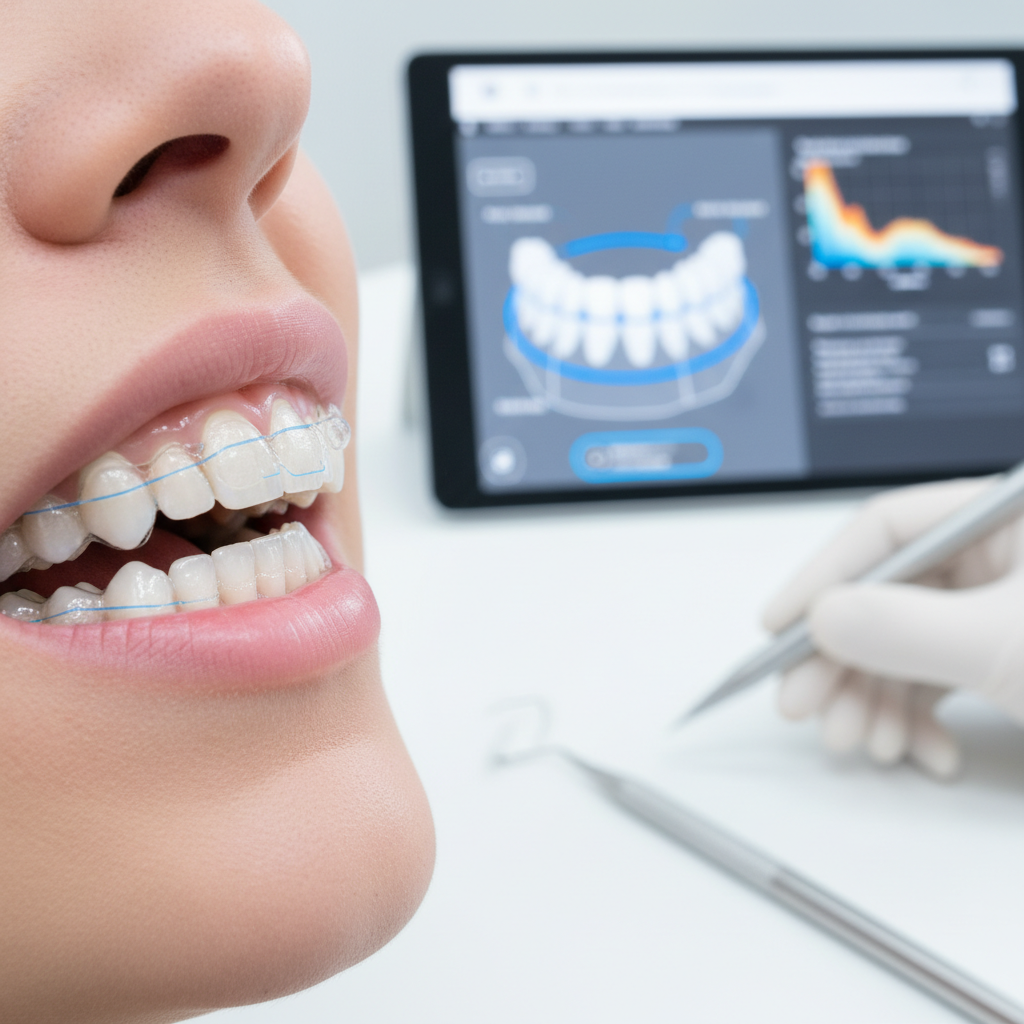
In a premium practice, clear aligner retreatment is often combined with ai orthodontic planning or ai guided braces planning. These tools analyze 3D scans of your teeth, simulate movement, and help your orthodontist design a precise series of aligners to target just the teeth that relapsed. If you are aiming not only to correct movement but also to upgrade your smile aesthetics, aligner retreatment can integrate with cosmetic orthodontic upgrades for a more photogenic result.
3. Modern braces for more advanced relapse
If your teeth have shifted more significantly, you may need braces again. The good news is that second‑round treatment is often shorter than your original treatment, and you have more esthetic choices than ever.
Premium options you can explore include:
- Clear or tooth‑colored bracket systems that blend into your teeth, similar to esthetic bracket systems
- Sleeker premium braces options that work more efficiently than older designs
- Shorter, targeted treatment focused on the teeth that moved the most rather than a full‑arch reset
Retreatment with braces can be planned using advanced technologies available in an orthodontic technology clinic. With orthodontic technology refinements, digital scanners, 3D imaging, and precision wires are used to move teeth predictably, limiting discomfort and treatment length.
If you live near Johnson City, you can also look into accelerated orthodontics johnson city, which uses adjunctive tools to shorten overall treatment time so your second round of braces is as efficient as possible.
4. Surgical solutions for jaw‑driven relapse
When relapse stems from underlying jaw misalignment rather than just tooth movement, you may need more than braces or aligners. TS Orthodontics notes that in many adult cases, significant relapse tied to jaw structure is not fully correctable with orthodontics alone, because adult jaws are not as adaptable as growing jaws [4].
Oral and maxillofacial surgery can:
- Reposition the upper jaw, lower jaw, or both
- Correct asymmetry and deep bite issues
- Create a more stable foundation so teeth can remain aligned long term [4]
These treatment plans are team‑based. Your orthodontist aligns the teeth before surgery, your surgeon corrects the jaw, and then your orthodontist fine‑tunes the bite afterward. If you need this level of care, you are essentially in the category of advanced orthodontic cases, where detailed planning and coordination matter more than speed.
Choosing the right retainer to prevent future relapse
Any orthodontic relapse correction, from minor to extensive, only holds if your retention plan fits your lifestyle and is followed long term.
Fixed versus removable retainers
Retainers fall into two main categories:
- Fixed retainers
- Removable retainers such as Hawley or Essix
A 2024 study of 150 patients compared Hawley, Essix, and permanent retainers. Permanent retainers showed the least relapse six months after treatment. Anterior relapse averaged only 0.2 mm with permanent retainers, compared with 1.0 mm for Hawley retainers and 0.8 mm for Essix [5]. Posterior relapse was similarly lower. The authors concluded that permanent retainers are the preferred protocol for minimizing early relapse.
Fixed lingual retainers are also widely considered a gold standard because they do not rely on daily patient cooperation [6]. They are bonded discreetly behind the teeth and can remain in place for many years.
However, they are not perfect. A 2022 review of 34 studies found:
- Failure rates between 11 percent and 53 percent
- Unwanted tooth movements in 1.1 percent to 5 percent of patients
- Movement can appear within the first month and even 2 to 4 years after placement [6]
Different wire types, like multi‑strand stainless steel or fiber‑reinforced composites, each have trade‑offs in terms of flexibility, relapse risk, and bond failure rates [6]. This is why your orthodontist may individualize your retainer choice based on your bite, risk factors, and how well you feel you can commit to removable wear.
Optimal retainer wear schedule
San Antonio Orthodontics offers a helpful baseline for retainer wear [3]:
- First year after treatment: 22 or more hours per day
- Years 1 to 2: transition to nighttime‑only wear
- After year 2: ongoing nighttime wear, likely for life, to keep the periodontal ligament memory in check
This timeline can be adapted if you have already experienced relapse. After orthodontic retreatment, your orthodontist may recommend a more aggressive retention plan, sometimes combining a fixed retainer behind the front teeth with a removable nighttime retainer to control broader arch form.
For a more premium, customized approach, digital smile planning tn and smile perfection orthodontics can be used to model how your teeth and bite should look in the long term, then design retainers that protect that specific outcome.
When relapse needs specialized or premium care
If you are considering investing again in your smile, you may not just want your teeth back where they were. You may be looking for a true upgrade in function, appearance, and stability. That is where specialized and high‑end options become valuable.
AI driven planning and digital smile design
Modern relapse correction often starts with comprehensive digital diagnostics:
- High‑resolution 3D scans of your teeth
- Digital facial photographs and bite analysis
- AI tools to predict how your teeth will move and respond over time
With ai orthodontic planning or ai guided braces planning, your orthodontist can test different retreatment scenarios digitally before touching a single tooth. This kind of simulation is especially useful if you are combining:
- Orthodontic relapse correction
- Cosmetic enhancements
- Restorative dental work, such as veneers or implants
You can preview your final smile using digital smile planning tn so that your retreatment is not just about “fixing what moved” but about achieving the smile you want today.
Cosmetic upgrades during relapse correction
If you were not fully satisfied with the aesthetics of your first treatment, relapse correction gives you a second chance to elevate the appearance of your smile:
- Upgrade to low‑profile, clear, or fully esthetic bracket systems
- Choose high‑translucency aligners that resist staining
- Coordinate tooth alignment with whitening or minor reshaping
Options such as cosmetic orthodontic upgrades and orthodontic upgrades johnson city are designed for patients who want functional correction and a high level of cosmetic refinement. In a luxury orthodontic clinic or boutique orthodontic care setting, you can expect more personalized scheduling, quiet treatment spaces, and closer coordination with your general or cosmetic dentist.
Advanced interventions for stubborn relapse
If you have already tried traditional retention and still experience movement, your orthodontist might discuss minimally invasive procedures that modify the soft tissues that are pulling teeth back.
Perfect Braces explains two such options [7]:
- Frenectomy, laser removal of excess frenum tissue that often contributes to spacing between the front teeth
- Fibrotomy, laser detachment of gingival fibers around rotated teeth to reduce the tendency to twist back after correction
These are typically done under local anesthesia and paired with strong retainer protocols. They are not necessary for every patient, but in targeted cases they can make a significant difference in long‑term stability.
In very complex adult relapse cases tied to jaw alignment, TS Orthodontics emphasizes that oral and maxillofacial surgery can be the long‑term solution. Surgical repositioning of the jaws, coordinated with orthodontics, provides a more stable base for your teeth and improves chewing function and facial harmony [4].
What to expect from modern orthodontic retreatment
If you are weighing whether to correct relapse now or simply live with it, it helps to understand how retreatment is approached today.
Comprehensive assessment and planning
A careful orthodontist will start with a full assessment:
- Detailed medical and dental history
- Discussion of your previous orthodontic experience
- 3D imaging, photographs, and digital models
- Bite and TMJ evaluation
From there, you can review options like orthodontic retreatment services or retreatment care orthodontics, and decide on the balance you want between speed, cost, and cosmetic priorities.
If you prefer an elevated experience, you can also look for practices that position themselves in the high end orthodontics johnson city or luxury orthodontic clinic category. These offices typically invest more heavily in the latest scanners, software, and comfort‑oriented amenities.
Treatment time and comfort
Relapse correction is usually shorter than your original orthodontic treatment, particularly if most of your teeth remain close to ideal.
You can generally expect:
- Shorter active phases, because the amount of movement needed is smaller
- Often lighter forces, especially with premium braces and aligner systems
- Fewer emergency visits, thanks to stronger materials and better planning
If time is a concern, you can explore accelerated orthodontics johnson city, which may include vibration devices, special wires, or other adjuncts to enhance tooth movement and potentially reduce treatment length.
Taking the next step toward a stable smile
Orthodontic relapse correction is about more than pushing teeth back into line. It is about understanding why they moved, choosing the right level of intervention, and putting a realistic retention plan in place so you do not have to repeat the process again.
You have a wide range of options, from simple retainer‑only correction to sophisticated retreatment with AI‑guided planning, esthetic appliances, and even surgical collaboration for complex cases. With the right combination of orthodontic technology clinic resources, premium appliance choices, and personalized retention, you can restore and often improve your original result.
If you notice that your smile looks different than it did when your braces or aligners came off, that is the time to act. An early consultation for orthodontic retreatment services gives you more conservative choices, shorter treatment, and a better chance of locking in a smile that stays aligned for the long term.