

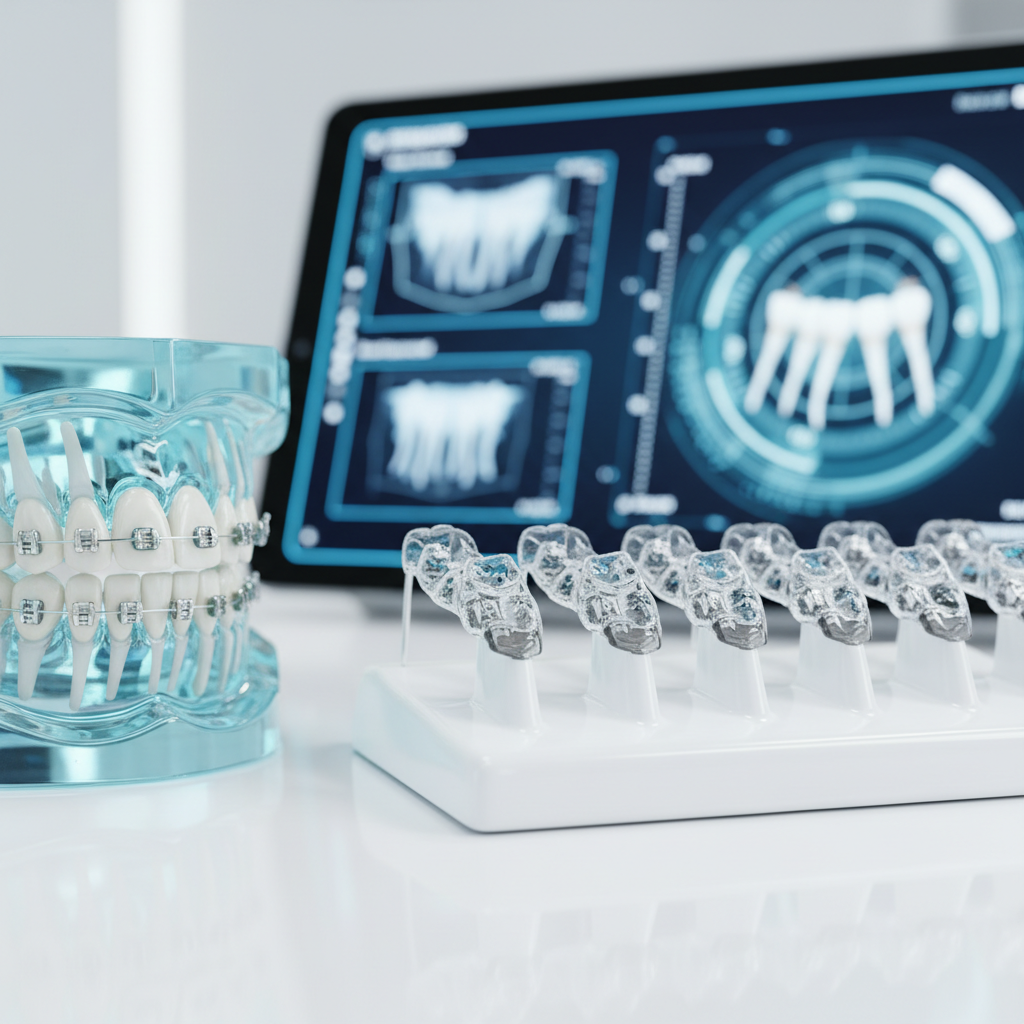
Understanding advanced orthodontic cases
When you hear “advanced orthodontic cases,” you might think of complex problems that are harder to fix. In reality, advanced orthodontic cases are situations where your teeth, bite, or jaw alignment are challenging enough that they need specialized planning, technology, or techniques beyond standard braces or aligners. If you have already tried treatment that did not fully work, or you have significant crowding, bite issues, or facial imbalance, you may fall into this category.
Advanced orthodontic care is not only about straightening teeth. Modern specialists look at how your teeth, jaws, joints, and facial structure all work together so you can chew comfortably, protect your teeth from wear, and feel confident about your smile. Practices that focus on high level solutions often use digital tools, AI supported planning, and premium appliances to give you more precise and efficient results than were possible even a few years ago [1].
When your case counts as “advanced”
You might be unsure whether your situation really qualifies as an advanced orthodontic case. The label is less about making your case sound complicated and more about recognizing that it needs extra expertise and planning.
Common problems that qualify
Adults and teens who need advanced care often have one or more of these issues:
- Severe crowding or spacing that affects multiple teeth
- Overbite (deep bite) where upper teeth cover most of the lower teeth
- Underbite, crossbite, or open bite that affects chewing or speech
- Midline discrepancies where your upper and lower front teeth do not line up
- Jaw misalignment that changes your facial proportions
Rochester Orthodontics notes that crowding, spacing, overbite, underbite, crossbite, and midline discrepancy are some of the most frequent advanced problems in adults and can negatively affect oral health and function [2].
Signs your bite is affecting your health
Severe misalignment can put extra strain on your jaw joints and teeth. This can raise your risk of:
- TMJ (temporomandibular joint) disorders, including jaw pain or clicking
- Bruxism or teeth grinding
- Cavities and enamel wear due to uneven forces
Kellyn Hodges Orthodontics highlights that serious misalignment can lead to TMJ problems, bruxism, dental erosion, and even changes in the shape and proportions of your face, which is why complex orthodontic treatment is sometimes necessary [3].
If any of this sounds familiar, advanced care can offer solutions that go beyond “just getting braces.”
How specialists diagnose complex alignment issues
For advanced orthodontic cases, a quick exam is not enough. You benefit from a careful, technology supported evaluation of your teeth, bone, and facial structure before any treatment starts.
Digital imaging and 3D assessment
Leading practices rely on:
- 3D cone beam imaging to see your teeth roots, bone, and jaw joints
- Digital intraoral scanners instead of traditional impressions
- Detailed photographic records of your smile and facial profile
Rochester Orthodontics emphasizes that precise diagnostics using advanced 3D imaging and digital scanning are essential for accurately assessing tooth and jawbone issues in adult patients with complex problems [2]. This type of evaluation is also a key part of digital smile planning tn, where your orthodontist designs how your teeth and facial aesthetics should look at the end of treatment.
AI assisted planning and simulation
Artificial Intelligence now plays a meaningful role in advanced orthodontic planning. AI models can analyze your scans and predict how your teeth are likely to move under different treatment scenarios. Research shows that AI assisted planning can:
- Improve the accuracy of tooth movement predictions
- Custom tailor treatment to your specific anatomy and biomechanics
- Shorten treatment duration by about 4.3 months on average in advanced cases compared to traditional methods (14.6 vs 18.9 months) [4]
If you choose a practice that offers ai orthodontic planning or ai guided braces planning, your case can benefit from these detailed simulations. Some AI tools also automate cephalometric landmark detection and bracket positioning with around 90 to 95 percent accuracy, which enhances precision, although orthodontist oversight is still essential for complex situations [4].
Treatment options for advanced orthodontic cases
Once your orthodontist understands your full situation, you will discuss which advanced treatments best fit your goals, schedule, and preferences. In many cases, combining methods leads to the most predictable and efficient result.
Traditional and premium braces systems
For the most difficult cases, traditional braces remain the most reliable foundation. Metal brackets and archwires apply gentle, graduated pressure to move teeth, with adjustments usually every four to eight weeks [3]. Your options within this category are broader than you might expect.
You can choose:
- Standard metal braces for maximum control and durability
- Self ligating brackets that use an integrated sliding clip instead of elastic ties to reduce friction and potentially shorten treatment time while improving comfort [5]
- Customized 3D printed ceramic brackets that closely match the color and shape of your own teeth and are nearly invisible socially, while retaining bond strength and low friction similar to commercial brackets [5]
Recent evaluations of LightForce 3D printed customized alumina brackets found that they can reduce treatment times, decrease the number of scheduled and emergency visits, and lower the rate of bracket debonding compared to conventional braces, which is a meaningful advantage in complex cases [5].
If you are interested in alternatives that are discreet but still highly capable, you can also explore premium braces options or esthetic bracket systems that fit your lifestyle and appearance goals.
Clear aligners for complex problems
Clear plastic aligners like Invisalign are no longer limited to simple straightening. They can treat certain advanced concerns, including:
- Moderate underbite and overbite
- Certain open bites and crossbites
- Significant crowding or spacing
Kellyn Hodges Orthodontics points out that aligners can address underbite, overbite, open bite, crossbite, and crowding in many patients. At the same time, they have limitations, especially for vertical tooth movement or severe malocclusions, which usually respond better to braces [3].
AI driven custom aligner design takes this a step further. By using 3D scans and advanced algorithms, orthodontists can create aligners that apply carefully optimized forces. This has been shown to reduce the number of aligners needed per case by about 20 percent and decrease discomfort, which increases efficiency for complex treatments [4]. If you are considering aligners for an advanced case, ask specifically about AI supported planning or orthodontic technology refinements.
Temporary anchorage devices and other innovations
For some advanced orthodontic cases, especially those that involve moving teeth in directions that are difficult or impossible with braces alone, your orthodontist may recommend:
- Temporary Anchorage Devices (TADs), which are tiny titanium anchors placed in the bone to provide a stable point to pull against. TADs allow very precise, targeted movement with “unparalleled accuracy” for complex cases, including closing large spaces or correcting severe bite problems [6].
- Palatal expanders in younger patients to widen the upper jaw and create space for teeth or correct crossbites [7].
- Oral surgery for jaw adjustments in severe skeletal discrepancies, usually planned as part of a combined orthodontic and surgical approach [7].
You may also encounter “smart” braces and brackets. These systems can include sensors that monitor the magnitude and direction of forces in real time, allowing your orthodontist to fine tune your biomechanics and potentially reduce visits through data driven adjustments [8].
Accelerated and tech enabled treatment paths
If you need advanced treatment, you might worry most about time and convenience. Newer approaches are designed to help on both fronts.
Reducing treatment time without cutting corners
Accelerated orthodontic treatments use methods such as controlled vibrational devices or micro-osteoperforation to speed up how bone remodels around moving teeth. Bateman Orthodontics notes that these advanced techniques can significantly shorten total treatment time while maintaining long term effectiveness for patients with complex needs [6].
AI assisted planning also contributes to faster progress. As noted earlier, studies report average treatment durations of about 14.6 months with AI planning versus 18.9 months with traditional approaches for advanced cases [4]. If speed is important to you, you may want to ask about accelerated orthodontics johnson city or similar services in your area.
Remote monitoring and fewer office visits
Continuous AI powered remote monitoring uses your smartphone to regularly capture images or scans of your teeth. These are analyzed by software and reviewed by your orthodontist. Research shows that this approach can reduce the number of in person visits, from an average of 12.8 down to 10.2 visits in complex cases, without sacrificing treatment quality [4].
Choosing an orthodontic technology clinic that supports this type of monitoring can make advanced treatment easier to fit into your life and can alert your provider quickly if something needs to be adjusted.
Advanced cases, cosmetic upgrades, and smile design
High end orthodontics is not only about solving functional problems. It is also about precisely shaping your final smile so it suits your face and personal style.
Beyond straight teeth: facial balance and esthetics
Modern advanced orthodontics often incorporates dentofacial orthopedics, which means guiding jaw growth in younger patients and harmonizing teeth, jaws, and facial structure in adults. Henry Advanced Orthodontics explains that this approach enhances not only your smile but also overall facial harmony and aesthetics [1].
Comprehensive protocols like the F.A.C.E. system treat the entire dental and facial system, not just tooth positions, so results can look more natural and age appropriate [9]. Techniques that focus on fuller lips, wider smiles, and proper incisor display are especially valued in premium and high end orthodontics johnson city settings.
Cosmetic orthodontic upgrades and finishing touches
If you already have a good bite but want your smile to look more refined, you can consider:
- Upgrading to more discrete or premium appliances through cosmetic orthodontic upgrades
- Switching from older brackets to newer esthetic bracket systems
- Requesting detailed orthodontic finishing touches, such as minor rotations, torque adjustments, or alignment of gumline and tooth edges
Digital workflows like digital smile planning tn help you see a preview of your expected outcome and allow you and your orthodontist to fine tune the esthetics together before committing to the final plan. Practices that focus on smile perfection orthodontics often devote extra time to this phase so your end result lines up with your vision.
Retreatment, relapse, and complex corrections
You might already have had orthodontic care in the past. If your teeth have shifted or your original treatment never fully addressed your issues, you still have options.
Why relapse and retreatment happen
Orthodontic relapse can occur for several reasons:
- Retainers were not worn as prescribed
- Growth or aging changed your bite over time
- Original treatment did not fully correct the underlying skeletal or bite problems
True Image Orthodontics notes that advanced diagnostic methods and tailored treatment plans are crucial when you are returning for complex retreatment, because your case is often more challenging than a first time patient’s [7].
If this sounds familiar, services like orthodontic relapse correction and orthodontic retreatment services are specifically designed to address these situations. Your orthodontist may use different tools than before, such as AI planning or TADs, to get a more stable and functional result.
Refinement and upgrade paths
Sometimes your teeth are mostly aligned, but you are not quite satisfied with the details. In those cases, refinement treatment orthodontics can close small spaces, correct minor rotations, or fine tune your bite without starting from scratch.
In other cases, you might combine retreatment with orthodontic upgrades johnson city, moving from older metal appliances to ceramic or 3D printed brackets or clear aligners. Practices that emphasize retreatment care orthodontics will walk you through how to build on your previous investment in treatment rather than simply repeating what did not work.
If you have already tried braces or aligners and are disappointed with your smile, advanced retreatment that uses modern diagnostics and AI guided planning often opens up options that were not available during your original care.
Comfort, safety, and long term maintenance
Advanced orthodontic cases also require careful attention to comfort, oral health, and stability so that your results last.
Making complex treatment more comfortable and safer
Modern appliances are designed to balance power with gentleness. Techniques like using V bends on NiTi wires can provide light, consistent force over a long range, which is ideal for delicate movements such as intruding teeth in Class III cases [9]. Self ligating and customized low friction brackets also reduce the force needed to move teeth, which can improve comfort.
Some smart brackets now incorporate antibacterial nanoparticle coatings, such as silver nanoparticles, which help limit plaque buildup and reduce enamel demineralization and white spot lesions, a common concern during longer advanced treatments [5].
At the same time, experienced providers are alert to related issues. For example, TMD (jaw joint) symptoms can appear or change during orthodontic treatment, especially in adolescents. Guidance from specialists like Dr. Harold Menchel on managing disc displacements and TMD during orthodontic care shows how important monitoring is for patient safety [9].
Retainers and ongoing support
No matter how advanced your care, your teeth will try to shift after treatment. Long term retention is non negotiable, especially for complicated corrections. True Image Orthodontics stresses using fixed or removable retainers along with regular dental checkups to keep teeth aligned and prevent relapse after the initial treatment phase [7].
Your long term plan should include:
- A clear retainer protocol that fits your lifestyle
- Scheduled reviews with your orthodontist or general dentist
- A strategy for what happens if you lose or break a retainer
If you value a high touch, personalized approach to follow up, consider practices that emphasize boutique orthodontic care or a luxury orthodontic clinic model, where ongoing support and accessibility are built into the experience.
Choosing the right advanced orthodontic partner
Your experience with advanced orthodontic treatment depends heavily on the team you choose. Advanced cases call for both clinical expertise and a patient centered approach.
When you evaluate providers, you might look for:
- Proven experience with complex adult and teen cases
- Use of AI based planning and modern appliances
- Access to accelerated options if speed is a priority
- Flexible financial arrangements, similar to the payment plans and insurance collaboration used at True Image Orthodontics and Henry Advanced Orthodontics [10]
If you want a premium, highly customized experience that blends technology with esthetics, looking into high end orthodontics johnson city or a similar advanced orthodontic technology clinic can help you find a practice that aligns with your expectations.
In the end, advanced orthodontic cases are not a barrier, they are a signal that you can benefit from more powerful tools and more thoughtful planning. With the right specialist and technology, you can move from living with complex problems to enjoying a stable, healthy, and attractive smile that feels like it finally matches who you are.


